An automotive air filter element is pleated filter media whose pleats must keep their spacing under airflow and vibration for the filter's whole service life, sealed into a frame or housing without bypass gaps. Hot melt adhesive does both jobs in production: pleat bonding and spacing lines on the media, and the frame seal that forces air through the media rather than around it. The manufacturer's hot melt detail listings document automotive air filter as a distinct application direction: filter production is a different factory, a different line and a different buyer from the general automotive range (roof linings, boots, upholstery).
The filter adhesive's working virtues are process virtues. It must apply in clean beads or lines at pleating-line speed without stringing onto the media (strings become airflow defects), set fast enough to hold pleat geometry immediately, and stay flexible enough not to crack as the element vibrates and ages in heat under the bonnet. The frame seal has the opposite emphasis: complete, gap-free wetting of frame materials so no unfiltered air bypasses the media. One production line, two adhesive behaviours — a filter enquiry should say which station it is sourcing, or both.
What Is Confirmed Per Product
This application is documented as a category of the manufacturer's range rather than as one published parameter set, so no single specification table covers it. To have the grade for your job confirmed in the written quotation, send: the substrate and the surfaces being bonded; the application method and coat weight; the working and service temperatures; and the block form and quantity you need. The quoted grade's viscosity, softening behaviour, working temperature, block form and price are confirmed against those inputs, and proven with a sample before bulk.
Specifying Filter Adhesive
- Station — pleat bonding/spacing, frame sealing, or both.
- Media and frame — filter media type and frame material (plastic, metal or card constructions).
- Line — pleating or assembly line speed, application method and bead pattern.
- Service — temperature and vibration duty in the vehicle, and the filter maker's own test standard.
Samples for this application should be run into finished elements and put through the filter maker's own checks — pleat stability, seal integrity, ageing — because the adhesive qualifies inside the element, not on a bench coupon.
How to Specify This Adhesive
A useful enquiry names five things: the substrate or material being bonded, the application method and equipment, the coat weight in grams per square metre where it is known, the temperature the bond must withstand in service, and the test standard your customer applies. Those five points are the same starting points the manufacturer's own customisation process uses when it opens a new formulation brief, and they let the laboratory match an existing grade before anyone talks about developing a new one.
If you are replacing an adhesive already in production, send its current grade name or a sample description — viscosity behaviour, colour and the failure you are trying to fix narrow the choice faster than a catalogue number. Samples are part of the documented route: free samples are listed on many product pages, and the freight arrangement for your sample is confirmed in the reply.
Supply, Packing and Samples
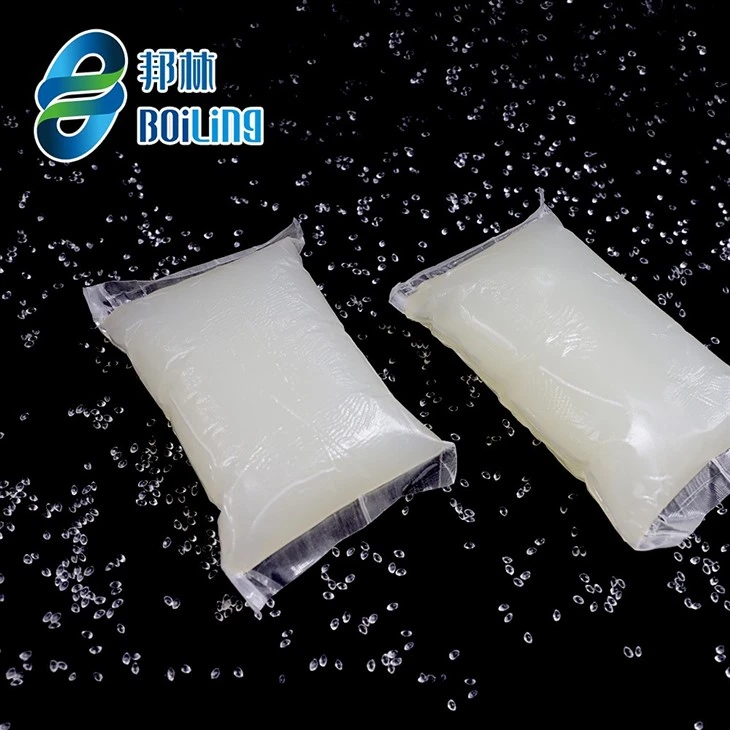
The documented minimum order on product listings is 1,000 kg, consistent with the 1-tonne minimum stated in the manufacturer's published frequently asked questions, and the documented production cycle is 7–15 days. Packing follows the listing for the grade — film-wrapped blocks are the standard form, with carton packing stated per product — and can be confirmed against your handling requirements in the quotation. Nothing on this page promises a grade's availability before the quotation confirms it for your specification.
How does this differ from the automotive range?
The automotive range covers interior trim categories with the documented parameter table; filter production is its own application, with its own line and buyers, and its conditions are specified separately.
Pleats or frame — one adhesive?
They are different behaviours and often different grades. State the station in your enquiry; the applicable grade and the supply scope for each station are confirmed in the reply.
What parameters apply?
Confirmed per product against your media, frame and line — the grade follows the filter construction, so its figures are set in the quotation.
Send the application, substrate, application method and the quantity you need — the grade, sample route and price are confirmed per product in the written quotation.
Request a Quotation