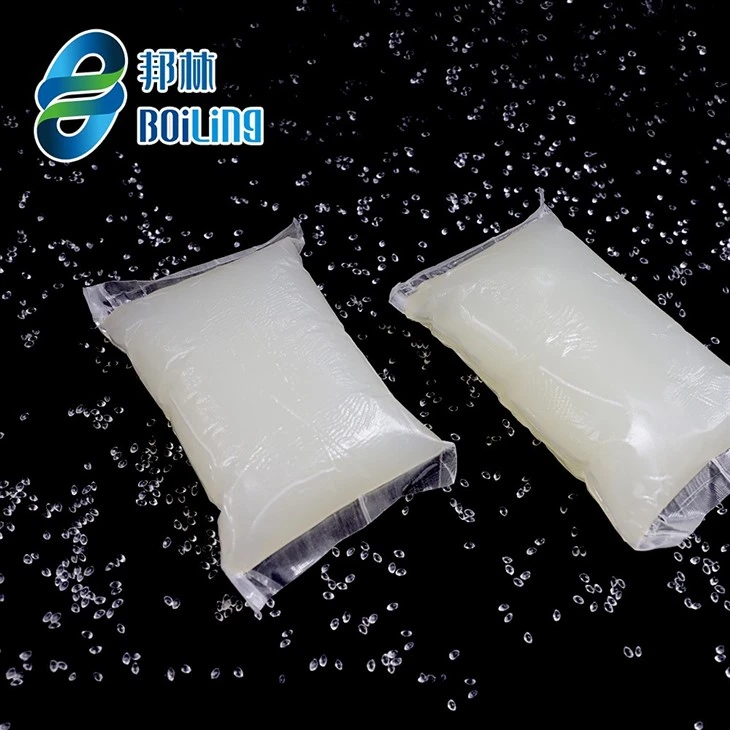
Shoe production bonds more unlike materials in one product than almost any other line: uppers to soles, linings to uppers, toe and heel components into place, often within the same shift. The manufacturer's footwear direction is documented as a product group with both a general grade — listed for the shoes and footwear industry and for sports shoes — and a model table for specific assembly uses, which makes it one of the most concretely specified application groups in the range.
Documented Footwear Specification
| Footwear adhesive (documented general listing) | Value |
|---|---|
| Viscosity (at 180°C) | 1,000–1,500 cps |
| Colour | White / yellow |
| Softening point | 80–85°C |
| Working temperature | 150–180°C |
| Minimum order | 1,000 kg |
| Documented model table (footwear line) | Packing / colour / viscosity |
|---|---|
| JGJ | 25 kg per box · white · 1,000–1,500 cps · softening point 80–85°C |
| 705B | 25 kg per box · yellow transparent · 3,000–4,100 cps · softening point 85–105°C |
| 702A | 25 kg per box · yellow transparent · 4,400–5,000 cps |
Read the model table the way a production manager does: the general grade and JGJ sit at the lighter, faster end of the family's viscosity range; 705B steps up in both viscosity and softening point; 702A is the heaviest documented viscosity of the three. Those are different tools for different stations and materials, not a good-better-best ladder — the station's substrates and application method decide which row belongs in your plant, and the quotation confirms the model against them.
Specifying Footwear Adhesive
Footwear enquiries should name the shoe type (sports, casual, mountaineering — the documented listings name all three territories), the material pair at the station in question, and how the adhesive is applied. Flexibility in service is the property buyers most often under-specify: a bond that passes a static peel test can still crack at the flex point, so production-representative testing — bonded, lasted and flexed — is the evaluation that counts, and samples are the documented way to run it.
How to Specify This Adhesive
A useful enquiry names five things: the substrate or material being bonded, the application method and equipment, the coat weight in grams per square metre where it is known, the temperature the bond must withstand in service, and the test standard your customer applies. Those five points are the same starting points the manufacturer's own customisation process uses when it opens a new formulation brief, and they let the laboratory match an existing grade before anyone talks about developing a new one.
If you are replacing an adhesive already in production, send its current grade name or a sample description — viscosity behaviour, colour and the failure you are trying to fix (edge lifting, ooze, stringing, cold failure) narrow the choice faster than a catalogue number. Samples are part of the documented route: free samples are listed on many product pages, and the freight arrangement for your sample is confirmed in the reply.
Supply, Packing and Samples
The documented minimum order on product listings is 1,000 kg, consistent with the 1-tonne minimum stated in the manufacturer's published frequently asked questions, and the documented production cycle is 7–15 days. Packing follows the listing for the grade — film-wrapped blocks are the standard form, with carton packing stated per product — and can be confirmed against your handling requirements in the quotation. Nothing on this page promises a grade's availability before the quotation confirms it for your specification.
Which model suits sports shoes?
A sports shoe listing is documented in this family, and the model table gives three viscosity steps. The right model depends on the station and materials; send both, and the matched model is quoted.
Can one grade run the whole shoe?
Different stations stress bonds differently — upper assembly, sole attaching and component setting are different jobs. Expect the discussion to be station by station.
What packing do footwear grades come in?
The documented model table states 25 kg per box across the three models.
Send the application, substrate, application method and the quantity you need — the grade, sample route and price are confirmed per product in the written quotation.
Request a Quotation