A film label — on BOPP, PE, PET or similar face stock — asks more of its adhesive than a paper label does. The face is smooth and often low-energy, so the adhesive must wet it completely to avoid bubbles and edge lift; the finished label is frequently on a container that flexes or squeezes, so the bond must flex too; and where the label is clear, the adhesive becomes part of the product's appearance. The manufacturer's label family documents a dedicated film label direction, characterised in its own terms: high initial tack, flexibility, holding power and a moderate, balanced peel.
Those four characteristics are a system, not a wish list. High initial tack gets the label down on the applicator at speed, including onto curved containers. Flexibility keeps edges down when the container is squeezed or the film moves with temperature. Holding power resists the slow shear of a label trying to slide or flag over weeks of shelf life. Balanced peel is the discipline at the other end — the label is permanent in service, but the adhesive's behaviour stays controlled rather than aggressive, which matters on thin films that would distort under an over-strong bond.
What Is Documented for This Direction
The manufacturer's film label page documents this direction by behaviour rather than by a parameter table: high initial tack, flexibility, holding power and a moderate, balanced peel. No viscosity, softening point or block table is published for this listing. The film grade's own behaviour is confirmed for your face stock in the quotation — film work is the case where the specific face (and any top-coating or corona treatment on it) moves the answer most, so samples are coated on your film, not on a substitute.
Film Label Decisions
- Face film and treatment — BOPP, PE, PET or other, and any surface treatment, which decides wetting work.
- Container duty — rigid or squeezable, diameter at the label, refrigeration or bathroom humidity in service.
- Appearance — clear-on-clear 'no-label look' work demands more of the adhesive's clarity and coat evenness.
- Print and conversion — die-cutting behaviour and ooze limits for stored rolls, checked on your conversion line.
How to Specify This Adhesive
A useful enquiry names five things: the substrate or material being bonded, the application method and equipment, the coat weight in grams per square metre where it is known, the temperature the bond must withstand in service, and the test standard your customer applies. Those five points are the same starting points the manufacturer's own customisation process uses when it opens a new formulation brief, and they let the laboratory match an existing grade before anyone talks about developing a new one.
If you are replacing an adhesive already in production, send its current grade name or a sample description — viscosity behaviour, colour and the failure you are trying to fix narrow the choice faster than a catalogue number. Samples are part of the documented route: free samples are listed on many product pages, and the freight arrangement for your sample is confirmed in the reply.
Supply, Packing and Samples
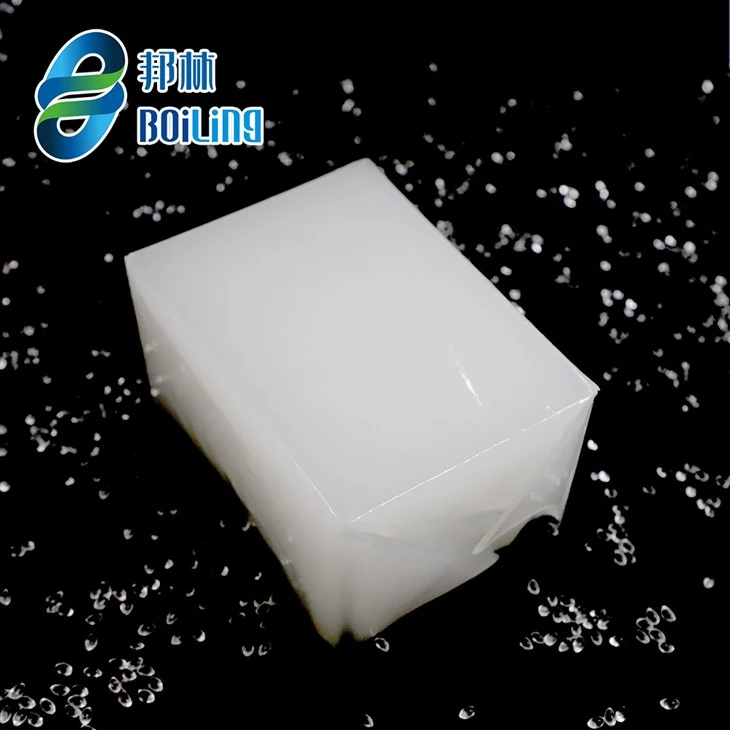
The documented minimum order on product listings is 1,000 kg, consistent with the 1-tonne minimum stated in the manufacturer's published frequently asked questions, and the documented production cycle is 7–15 days. Packing follows the listing for the grade — film-wrapped blocks are the standard form, with carton packing stated per product — and can be confirmed against your handling requirements in the quotation. Nothing on this page promises a grade's availability before the quotation confirms it for your specification.
Which films does it suit?
The direction is documented for film face stocks generally; the specific film and its surface treatment decide the grade. Send the film specification with the enquiry.
Film or paper labels for a new product?
Film suits wet, squeezable and premium-appearance duties; paper suits dry, rigid, economical ones. The bottle labelling page covers the wet-container case in depth.
Does it work for clear labels?
Clarity work is a coating-quality question as much as a grade question. State the no-label-look requirement in the enquiry so coat evenness is part of the trial.
Send the application, substrate, application method and the quantity you need — the grade, sample route and price are confirmed per product in the written quotation.
Request a Quotation