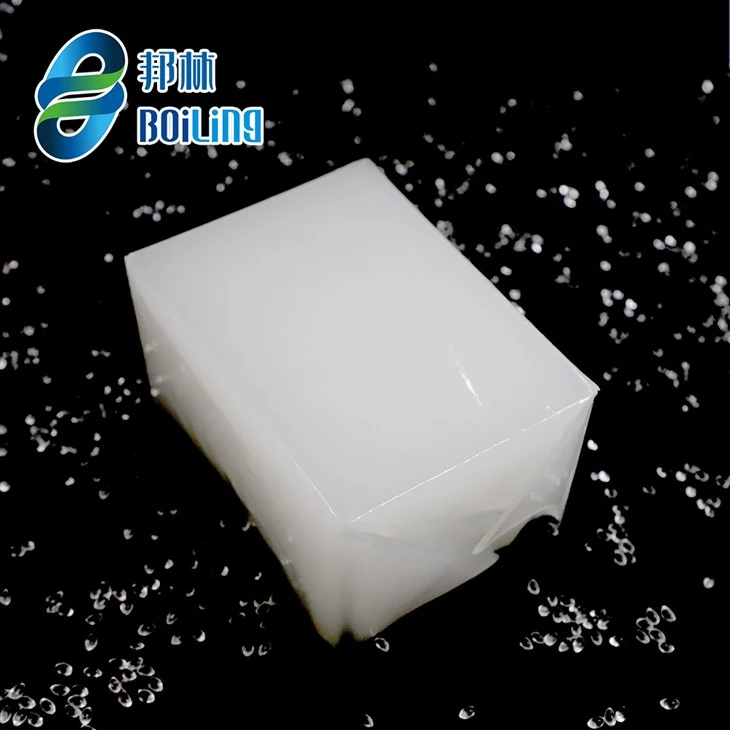
Bottle cap hot melt glue is documented in the manufacturer's polyolefin line as a specialised product: an adhesive formulated for bonding bottle caps and for creating tamper-evident seals, used across food and beverage, pharmaceutical and cosmetics packaging. The bond it makes is small and highly specified — it must hold through filling, transport and shelf life, behave predictably under hot filling or pasteurisation conditions where those processes apply, and then, in its tamper-evident role, fail visibly when the package is first opened.
Documented Specification
| Bottle cap hot melt glue (documented listing) | Value |
|---|---|
| Viscosity (at 180°C) | 1,000–2,000 cps, varying with the substrate |
| Colour | Water white |
| Softening point | 80–100°C, varying with the substrate |
| Working temperature | 150–180°C |
| Block specification | 0.45 / 0.6 / 1 kg per block |
| Packing / minimum | 25 kg per carton / 1,000 kg |
| Samples | Free sample, freight collect, per the listing |
The listing's stated features fill in the working picture: strong adhesion across plastics, metals and glass; temperature resistance suited to cold storage and pasteurisation-type conditions; quick setting for line speed; and versatility across plastic, aluminium and composite caps. The companion bottle cap adhesive listing adds the food-packaging frame — it describes the grade as meeting food-grade expectations for food and beverage packaging use. Buyers in regulated food or pharmaceutical channels should treat that as the manufacturer's listing statement and request the supporting documentation for their own file, as certificates are available upon request.
Specifying Cap Adhesive
Cap work is specified by the pair, not the glue alone: cap material and design (including any liner or seal structure), bottle neck finish material, application equipment and temperature, and the process that follows — hot fill, pasteurisation, cold chain. The same grade family also serves the adjacent small-bond jobs the source listings group together, but the quotation for a cap line should be built on the cap line's own facts. If the same plant also labels its bottles, the bottle labelling page covers the companion adhesive, and the two are often trialled together.
How to Specify This Adhesive
A useful enquiry names five things: the substrate or material being bonded, the application method and equipment, the coat weight in grams per square metre where it is known, the temperature the bond must withstand in service, and the test standard your customer applies. Those five points are the same starting points the manufacturer's own customisation process uses when it opens a new formulation brief, and they let the laboratory match an existing grade before anyone talks about developing a new one.
If you are replacing an adhesive already in production, send its current grade name or a sample description — viscosity behaviour, colour and the failure you are trying to fix (edge lifting, ooze, stringing, cold failure) narrow the choice faster than a catalogue number. Samples are part of the documented route: free samples are listed on many product pages, and the freight arrangement for your sample is confirmed in the reply.
Supply, Packing and Samples
The documented minimum order on product listings is 1,000 kg, consistent with the 1-tonne minimum stated in the manufacturer's published frequently asked questions, and the documented production cycle is 7–15 days. Packing follows the listing for the grade — film-wrapped blocks are the standard form, with carton packing stated per product — and can be confirmed against your handling requirements in the quotation. Nothing on this page promises a grade's availability before the quotation confirms it for your specification.
Which caps does it bond?
The documented listing names plastic, aluminium and composite caps, on bottles across beverage, food, pharmaceutical and cosmetics packaging. Your cap and neck finish are confirmed with a sample.
Does it survive pasteurisation?
The listing states temperature resistance for hot-filling and pasteurisation-type conditions. The exact cycle in your plant is part of the sample evaluation.
What is the minimum order?
The documented listing states 1,000 kg, packed 25 kg per carton, in 0.45, 0.6 or 1 kg blocks.
Send the application, substrate, application method and the quantity you need — the grade, sample route and price are confirmed per product in the written quotation.
Request a Quotation