Inside a car, adhesive holds the visible interior together: headliners laminated to their substrates, boot (trunk) trim and linings fixed, upholstery components assembled. These bonds live in the harshest cabin environment in this catalogue — a roof lining bakes under a steel roof in summer sun — and the manufacturer's automotive category is documented with a parameter table that separates the three jobs instead of pretending one grade covers the cabin.
Documented Automotive Parameter Table
| Automotive application (documented category table) | Viscosity / softening point |
|---|---|
| Vehicle roof lining | Viscosity above 15,000 cps · softening point 130–150°C · white |
| Car boot (trunk) trim | 4,000–7,000 cps · softening point 80–110°C |
| Automotive upholstery | 1,500–3,000 cps · softening point 90–130°C · yellow |
| Application temperature (category) | 150–180°C |
The table explains the engineering plainly. The roof lining grade's documented viscosity — above 15,000 cps — sits far above the upholstery grade's 1,500–3,000 cps range, and its softening point is higher too, because a headliner bond cannot creep or sag at cabin-roof temperatures. The boot grade sits between the two. A buyer should read this as the manufacturer's documented category frame: the specific grade for a component is quoted against the component's substrate, process and the vehicle maker's test requirements, which the buyer's specification — not a catalogue page — defines.
Automotive Buying Discipline
Automotive supply is documentation-led. Expect the conversation to cover the component, the substrates (foam, fabric, board, plastics), the laminating or assembly process, and the test regime the part must pass — heat ageing, peel after ageing, fogging or odour requirements where the vehicle maker's standard imposes them. The manufacturer's general systems are named as ISO 9001, REACH and SGS tested; component-level documentation is requested per programme, and certificates are available upon request for the buyer's file. Samples and trials on production substrates precede any volume commitment, on both sides.
How to Specify This Adhesive
A useful enquiry names five things: the substrate or material being bonded, the application method and equipment, the coat weight in grams per square metre where it is known, the temperature the bond must withstand in service, and the test standard your customer applies. Those five points are the same starting points the manufacturer's own customisation process uses when it opens a new formulation brief, and they let the laboratory match an existing grade before anyone talks about developing a new one.
If you are replacing an adhesive already in production, send its current grade name or a sample description — viscosity behaviour, colour and the failure you are trying to fix (edge lifting, ooze, stringing, cold failure) narrow the choice faster than a catalogue number. Samples are part of the documented route: free samples are listed on many product pages, and the freight arrangement for your sample is confirmed in the reply.
Supply, Packing and Samples
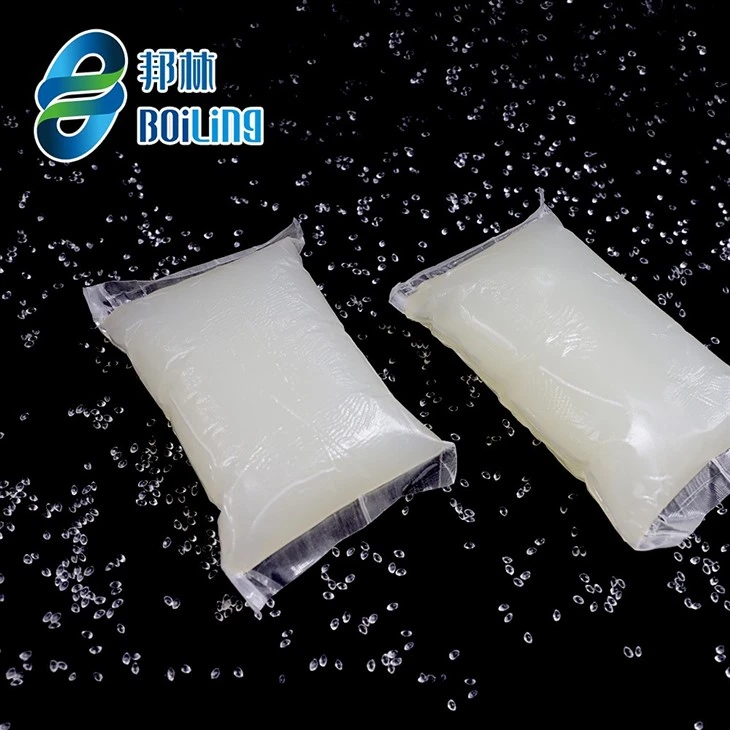
The documented minimum order on product listings is 1,000 kg, consistent with the 1-tonne minimum stated in the manufacturer's published frequently asked questions, and the documented production cycle is 7–15 days. Packing follows the listing for the grade — film-wrapped blocks are the standard form, with carton packing stated per product — and can be confirmed against your handling requirements in the quotation. Nothing on this page promises a grade's availability before the quotation confirms it for your specification.
Is one automotive grade enough for the whole interior?
The documented table separates roof lining, boot and upholstery precisely because their demands differ. Expect a grade per component family, quoted against its substrates and tests.
What softening point does a roof lining need?
The documented category value for vehicle roof lining is 130–150°C — the highest in the table, reflecting cabin-roof heat. Your component's own requirement comes from your specification.
Can documentation be supplied for an automotive file?
The company's systems are named (ISO 9001, REACH, SGS tested) and certificates are available upon request. Programme-specific documents are requested per component in the enquiry.
Send the application, substrate, application method and the quantity you need — the grade, sample route and price are confirmed per product in the written quotation.
Request a Quotation