Surface protection film is the temporary skin applied to sheet metal, profiles, panels, glass and finished parts so they survive cutting, bending, transport and installation without scratches — and it is only as good as its adhesive. The manufacturer's pressure sensitive family documents a floor protector hot melt glue line — the protective-film direction of its range, coated by film coaters and converters. (Flooring installation adhesive is a different job that only sounds alike.)
The specification is a balance with failure on both sides. Too little adhesion and the film lifts at edges, lets in dust and swarf, and fails at its only job. Too much — or adhesion that builds over time, heat and pressure — and the film tears on removal or leaves residue that costs more to clean than the film saved. The professional term for the target is controlled, stable peel: an adhesion level chosen for the surface (smooth metal, textured plastic, painted panel), held steady across the film's service life, on a film that may sit in a hot container or a cold yard before it is peeled.
What Is Confirmed Per Product
This application is documented as a category of the manufacturer's range rather than as one published parameter set, so no single specification table covers it. To have the grade for your job confirmed in the written quotation, send: the substrate and the surfaces being bonded; the application method and coat weight; the working and service temperatures; and the block form and quantity you need. The quoted grade's viscosity, softening behaviour, working temperature, block form and price are confirmed against those inputs, and proven with a sample before bulk.
Specifying Protective Film Adhesive
- Surfaces protected — metal, plastic, glass or painted finishes, and their textures.
- Service life — days or months on the part, and the storage and transport temperatures in between.
- Removal condition — residue tolerance: for most buyers, zero visible residue is the requirement — say so explicitly.
- Coating process — film type, coating method and coat weight on your line.
Ageing is the test that matters: a film that peels cleanly after a week may not after three months at temperature. Sample evaluation for this category should include aged panels — coated, stored hot, then peeled and inspected — before any bulk commitment, and the enquiry should state the ageing condition your product must survive.
How to Specify This Adhesive
A useful enquiry names five things: the substrate or material being bonded, the application method and equipment, the coat weight in grams per square metre where it is known, the temperature the bond must withstand in service, and the test standard your customer applies. Those five points are the same starting points the manufacturer's own customisation process uses when it opens a new formulation brief, and they let the laboratory match an existing grade before anyone talks about developing a new one.
If you are replacing an adhesive already in production, send its current grade name or a sample description — viscosity behaviour, colour and the failure you are trying to fix narrow the choice faster than a catalogue number. Samples are part of the documented route: free samples are listed on many product pages, and the freight arrangement for your sample is confirmed in the reply.
Supply, Packing and Samples
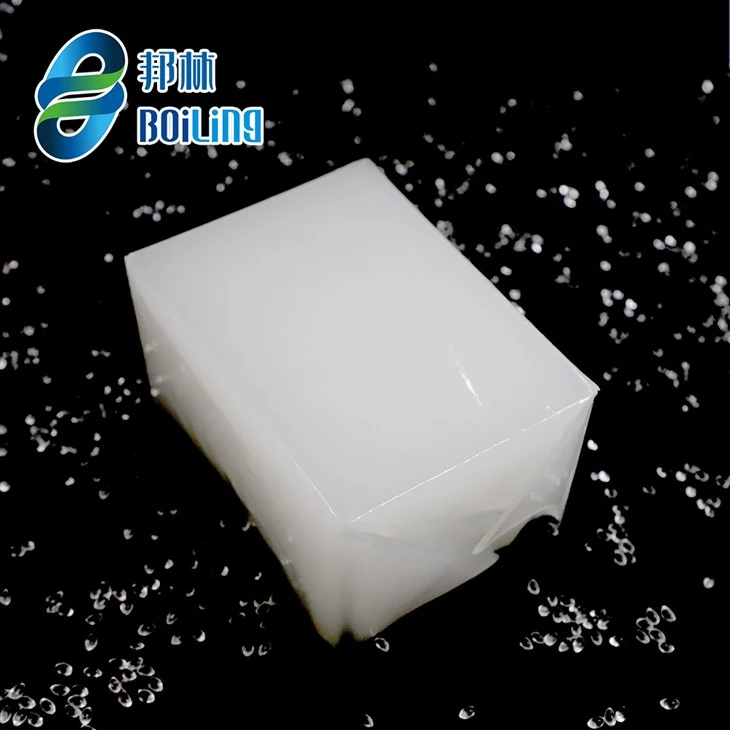
The documented minimum order on product listings is 1,000 kg, consistent with the 1-tonne minimum stated in the manufacturer's published frequently asked questions, and the documented production cycle is 7–15 days. Packing follows the listing for the grade — film-wrapped blocks are the standard form, with carton packing stated per product — and can be confirmed against your handling requirements in the quotation. Nothing on this page promises a grade's availability before the quotation confirms it for your specification.
How is this different from floor adhesive?
This is the adhesive for coating surface protection film; flooring installation adhesive is a different job.
Will it leave residue?
Residue-free removal is the design target of this category and the first thing a sample trial must prove on your surface, after ageing. State your residue tolerance in the enquiry.
Which surfaces can be protected?
Metals, plastics, glass and painted parts are the typical territory. The surface and its texture set the adhesion level, so name them precisely.
Send the application, substrate, application method and the quantity you need — the grade, sample route and price are confirmed per product in the written quotation.
Request a Quotation