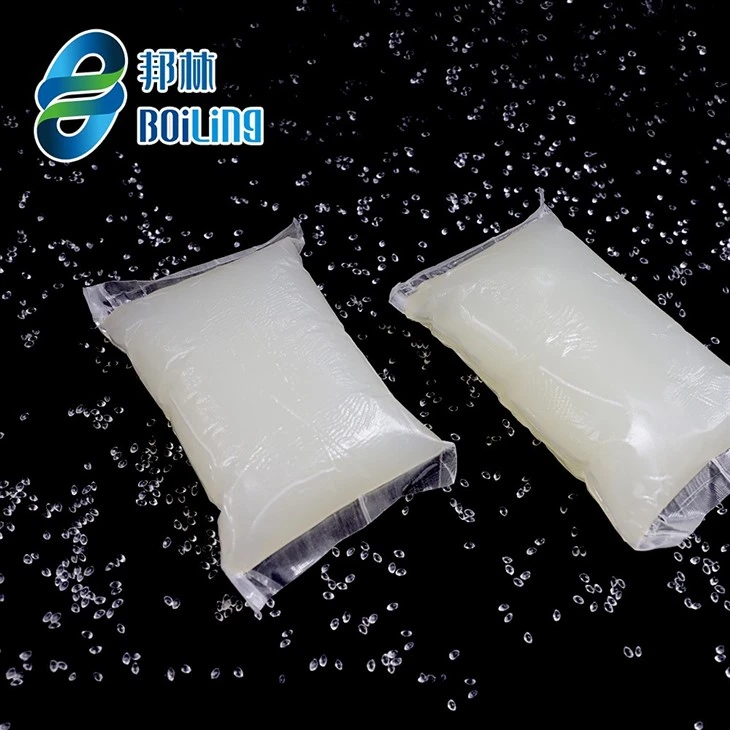
Tape adhesive is the adhesive used to manufacture tape — a documented category of the manufacturer's pressure sensitive range — not rolls of finished tape, which this catalogue does not sell. Tape converters coat a backing (film, paper, cloth or foam) with pressure sensitive adhesive, and the adhesive's behaviour on the coater and in the finished roll decides the product: coatability without stringing or bubbles, anchorage to the backing, and the finished tape's balance of tack, peel and shear.
Hot melt PSA is a converter's production choice for practical reasons: no solvents to dry or recover, coating weights set by the melt process, and line speeds that water- or solvent-based systems struggle to match economically. The grades a converter specifies are judged on the roll, months later, as much as on the coater on the day — ageing, edge ooze in stored rolls and unwind behaviour are adhesive properties as surely as initial tack is. A serious tape enquiry therefore talks about the finished tape's job (packaging tape, masking, specialty tapes) and its storage life, not only about coating day.
Specifying Tape Adhesive
- Backing — film, paper, cloth or foam, and its surface energy, which decides anchorage work.
- Coating method and weight — slot, roll or nozzle coating, and the target grams per square metre.
- Finished tape job — packaging, masking or specialty use, and the surfaces the tape must hold.
- Storage expectation — roll storage temperature and shelf life, which discipline ooze and ageing requirements.
The manufacturer's customisation brief asks for the same family of facts — base material, application method, coat weight, temperature resistance and test standard — because tape adhesive is a matched system, not a commodity scoop. Samples are coated and aged by the converter on their own backing before bulk; that trial, not a data-sheet comparison, is the qualification.
How to Specify This Adhesive
A useful enquiry names five things: the substrate or material being bonded, the application method and equipment, the coat weight in grams per square metre where it is known, the temperature the bond must withstand in service, and the test standard your customer applies. Those five points are the same starting points the manufacturer's own customisation process uses when it opens a new formulation brief, and they let the laboratory match an existing grade before anyone talks about developing a new one.
If you are replacing an adhesive already in production, send its current grade name or a sample description — viscosity behaviour, colour and the failure you are trying to fix (edge lifting, ooze, stringing, cold failure) narrow the choice faster than a catalogue number. Samples are part of the documented route: free samples are listed on many product pages, and the freight arrangement for your sample is confirmed in the reply.
Supply, Packing and Samples
The documented minimum order on product listings is 1,000 kg, consistent with the 1-tonne minimum stated in the manufacturer's published frequently asked questions, and the documented production cycle is 7–15 days. Packing follows the listing for the grade — film-wrapped blocks are the standard form, with carton packing stated per product — and can be confirmed against your handling requirements in the quotation. Nothing on this page promises a grade's availability before the quotation confirms it for your specification.
Do you sell finished adhesive tape?
No. This catalogue sells the adhesive — pressure sensitive hot melt in blocks — to converters who manufacture tape. Finished tape is not part of the range.
What backing materials are suitable?
Tape backings span film, paper, cloth and foam. Anchorage depends on the backing's surface; state yours and the grade is matched and sampled against it.
How is roll ooze controlled?
Ooze is a grade-and-coat-weight behaviour, disciplined by choosing the grade for the storage temperature and coat weight of the finished roll. It is a standard part of the sample evaluation.
Send the application, substrate, application method and the quantity you need — the grade, sample route and price are confirmed per product in the written quotation.
Request a Quotation